

Commercial Appliance Repair
COMMERCIAL APPLIANCE REPAIR IN La Puente, CA.
Los Angeles County suspends a food permit when wash water cannot be restored to 100 degrees and the detergent stops working, which makes a failing dish machine a closure risk rather than an inconvenience. Elite Flame Appliance Repair LLC provides commercial appliance repair in La Puente, CA across dish machines, ice machines, mixers, warmers, prep equipment, and the water heating behind them, with temperatures verified against the thresholds an inspector uses. Every reading gets written down before we leave the building.
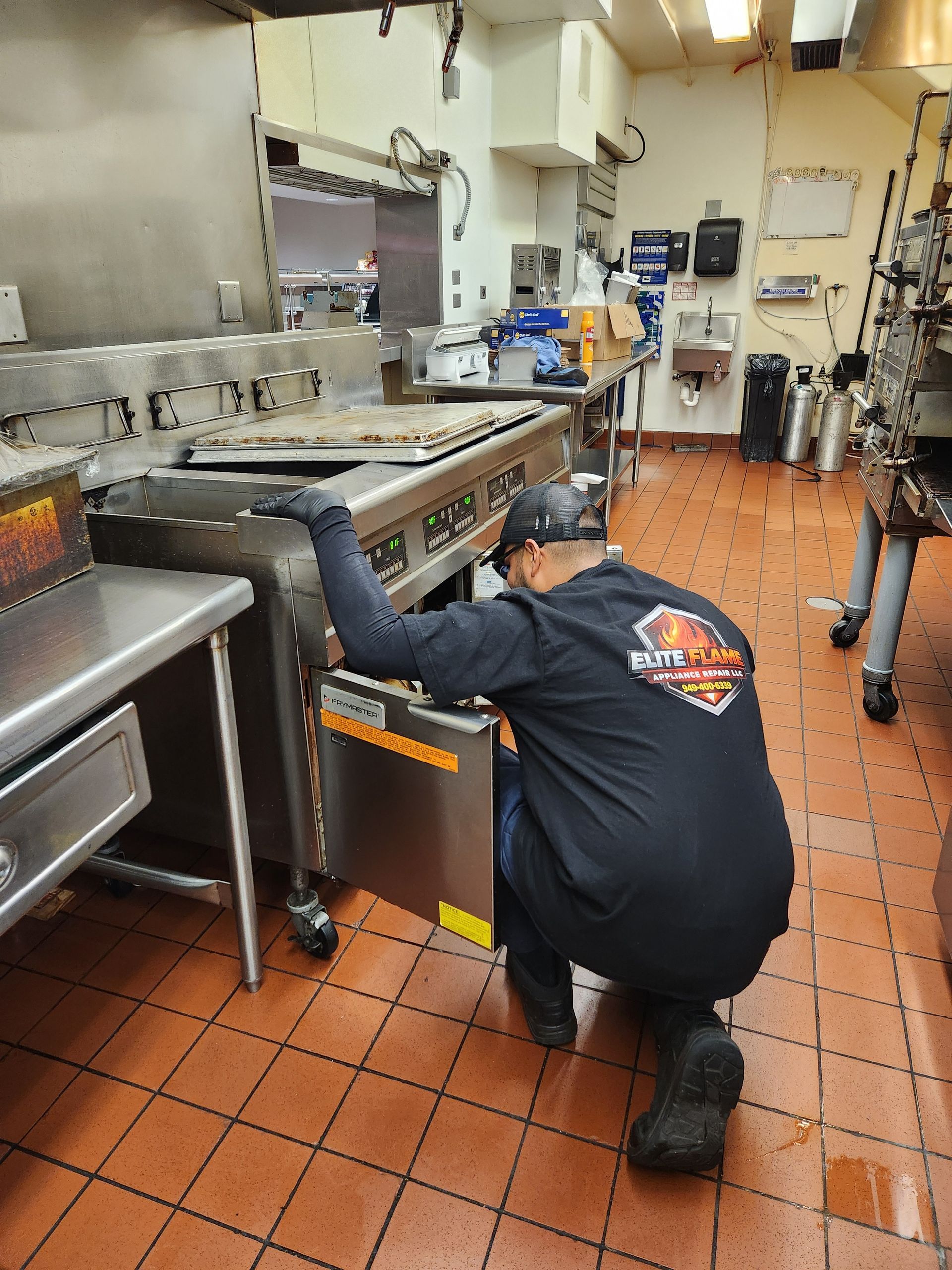

THE MACHINES NOBODY THINKS ABOUT UNTIL THEY STOP.
A dish machine, an ice machine, and a mixer have nothing mechanically in common. What they share is that nobody notices them until the moment they fail, and by then there is no workaround. Ice cannot be improvised on a busy Saturday and a sink cannot keep up with a completely full dining room.
Which is why these units get tested at the number that matters. Wash and rinse temperatures, ice harvest cycles, and water pressure are measured and recorded, not assumed from a panel light.
- Wash and rinse temperatures measured, not assumed
- Water pressure and supply checked at the machine
- Scale buildup addressed at the source
- Findings recorded for your inspection file
COMMERCIAL APPLIANCE REPAIR
A DISH MACHINE THAT RUNS IS NOT A DISH MACHINE THAT SANITIZES.
The cycle finishes, the light goes green, and the racks come out warm. None of that proves the rinse hit temperature. Hot-water sanitizing needs the final rinse to reach its rated temperature at the manifold, and manual sanitizing below 171 degrees does not sanitize at all. A booster heater losing output produces a machine that looks perfectly normal and yet passes nothing at the next inspection.
HARD WATER IS THE LOCAL VILLAIN.
La Puente tap water averaged 228 milligrams per liter of hardness in 2025, around 13 grains per gallon, which puts it firmly into the very hard category. That scale coats dish machine elements, blocks ice machine water distribution tubes, and clogs rinse arms. Half of what looks like a failed appliance around here is really a descaling job that was simply never scheduled.
WE HAVE ALREADY SEEN YOUR MACHINE FAIL.
There is no substitute for having already seen the failure in front of you. A dish machine that fills but will not drain, an ice machine cycling water without harvesting, a mixer with a slipping gear, each of those has a small number of real causes and a much longer list of things people replace by mistake. Which one of them has your kitchen been quietly guessing at?
WHY CHOOSE US FOR COMMERCIAL APPLIANCE REPAIR.
Warewashing That Passes Inspection
Wash and rinse temperatures are measured at the machine and written down. That number is the one an inspector will ask about, so it should never be a guess.
Ice Production You Can Rely On
An ice machine that makes half its rated output is a slow failure nobody logs. Restoring harvest cycles and water flow puts production back where your bar and kitchen need it.
Scale Treated As The Root Cause
Descaling the machine and addressing the water feeding it stops the same fault returning every few months. Local water makes this the single highest-value maintenance item in the building.
One Contractor For The Back Of House
Warewashing, ice, prep equipment, refrigeration, and the HVAC above them all handled together. That means one visit can close out several open problems instead of three separate appointments.
Downtime Measured In Hours
Common wear parts for warewashing and ice equipment ride on the truck. Where the part is standard, the repair finishes on the first visit rather than waiting on an order.
Honest Assessment Of Old Equipment
Some machines are past the point where parts availability makes repair sensible. You will hear that clearly, with the reasoning, rather than discovering it after a second failed repair.
WHAT WE FIX
OUR COMMERCIAL APPLIANCE WORK
The back of house runs on machines that have almost nothing in common except a water line and a breaker. Here is what we cover and where each one typically gives out.
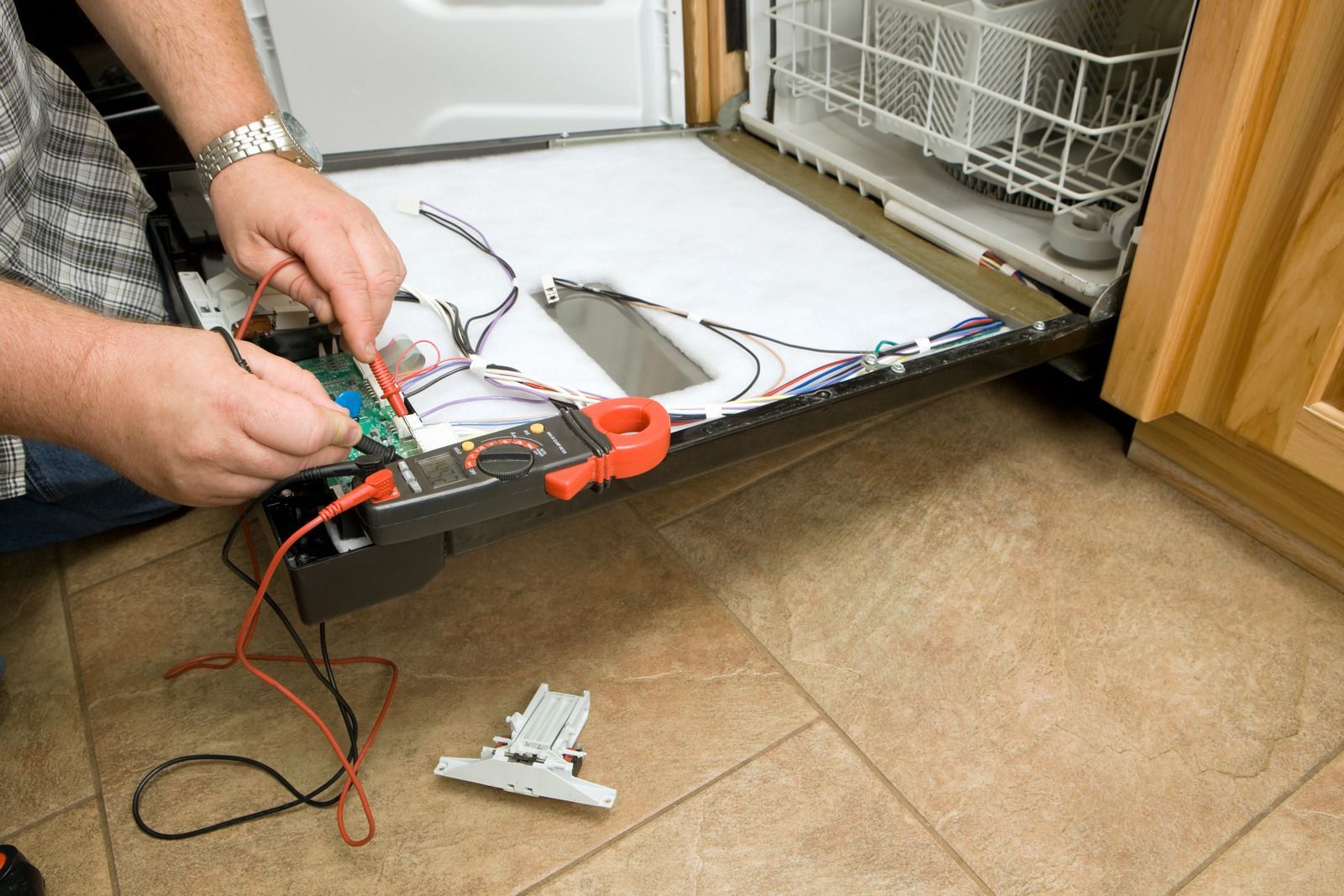
WAREWASHING
Dish Machine and Warewasher Repair
Booster heaters, wash and rinse pumps, drain valves, rinse arms, and chemical dispensers. Final rinse temperature is measured at the manifold rather than read off the gauge on the door.

ICE
Ice Machine Service and Repair
Water inlet valves, harvest solenoids, distribution tubes, float switches, and condensers. Machines that run water without producing any ice usually have a harvest fault rather than a refrigeration problem at all.
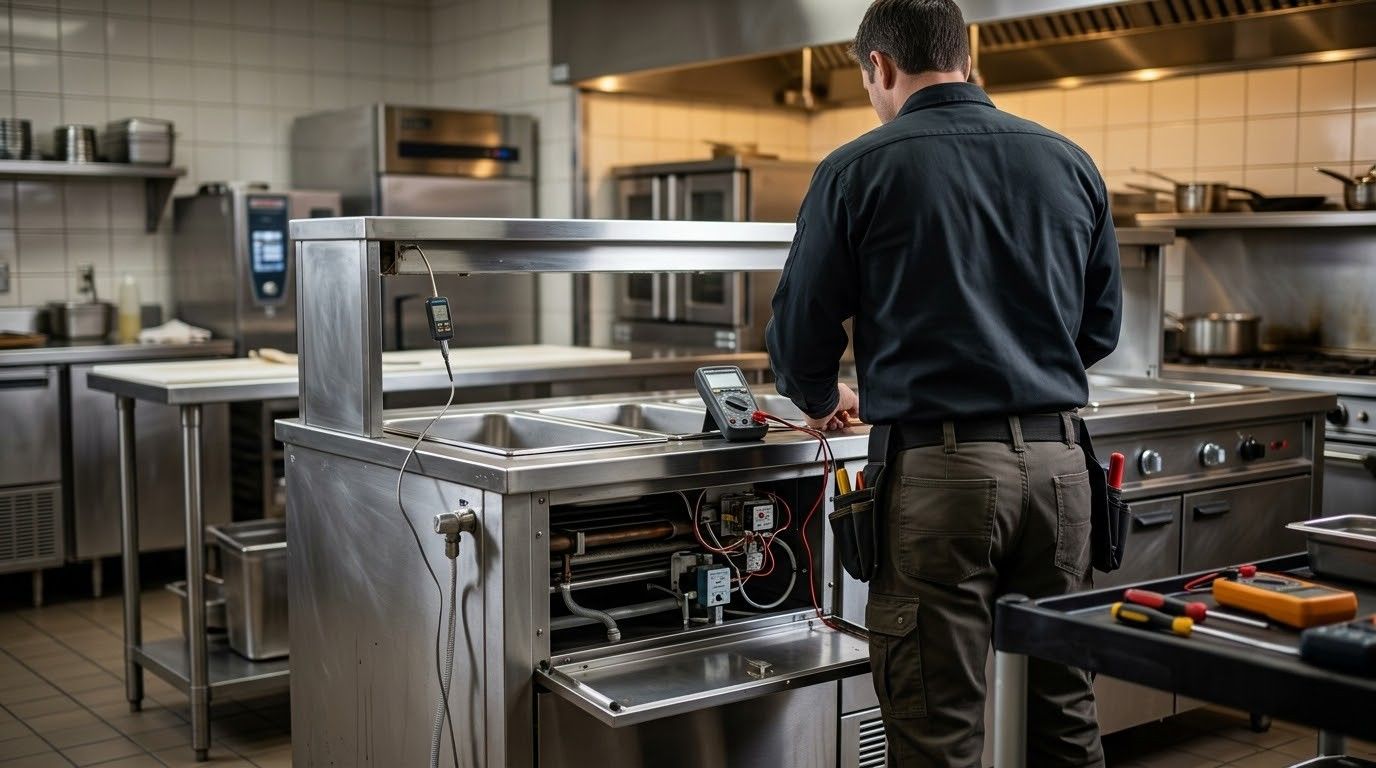
HOT HOLDING
Steam Tables, Warmers, and Holding Units
Elements, thermostats, water-level controls, door seals, and drain lines. Every single unit is verified against the 135-degree hot-holding threshold at more than one position, since the corners always fail before the center does.
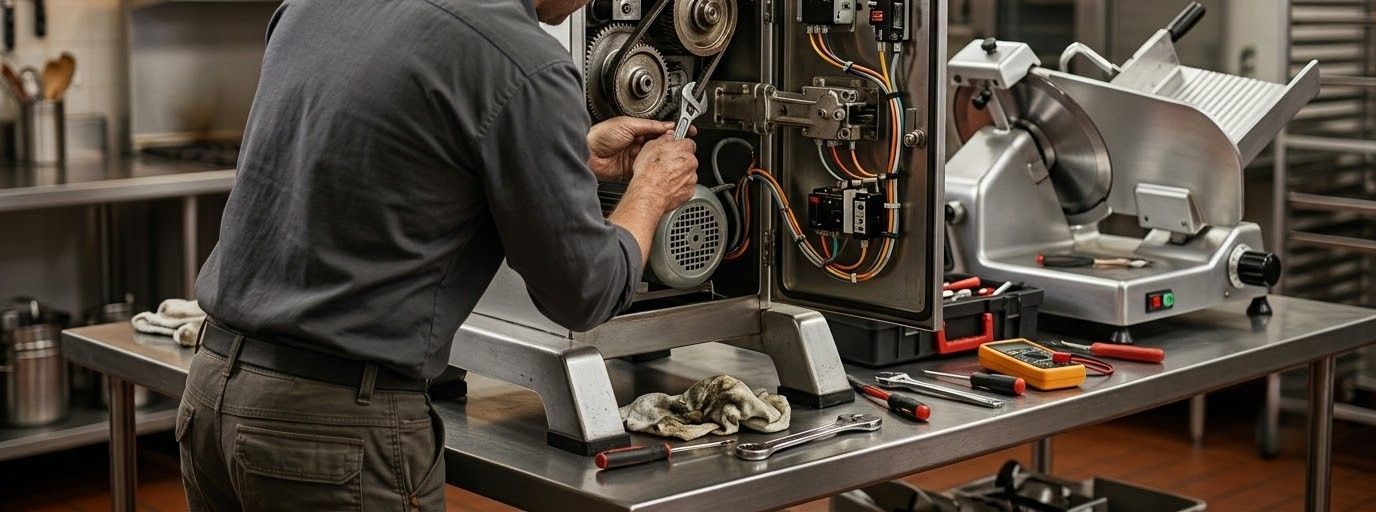
PREP
Mixers, Slicers, and Prep Equipment
Drive belts, gearboxes, bowl lifts, switches, and safety interlocks. Guards and interlocks are restored to working condition, never defeated, because a bypassed safety on prep equipment is how people get hurt.
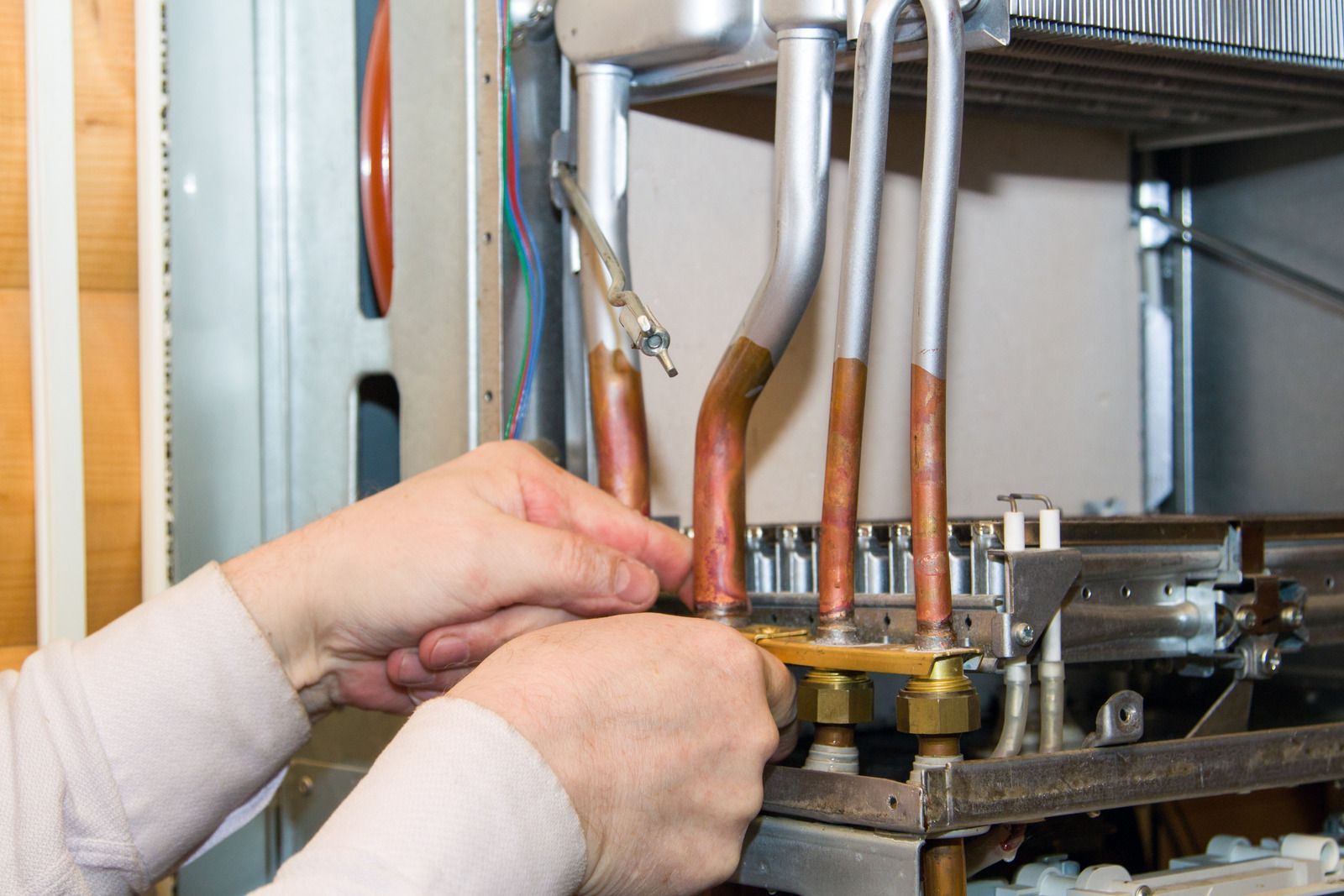
WATER SIDE
Descaling, Filtration, and Water Heating
Scale removal on elements and boilers, filter replacement, and checking that the water heater can actually supply the temperature the machine needs. Undersized hot water fails more dish machines than components do.
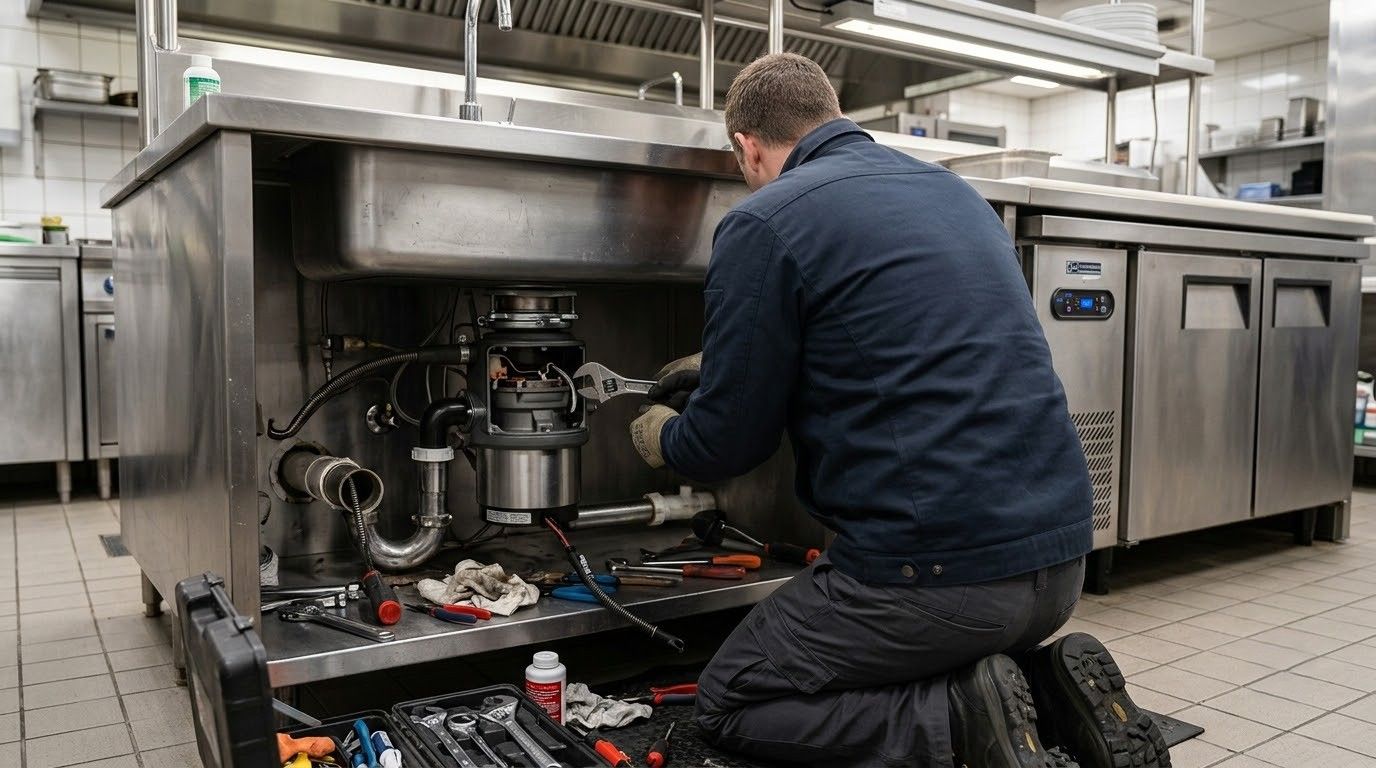
DISPOSERS
Disposers, Drains, and Under-Counter Units
Disposer motors, splash guards, under-counter refrigeration, and drain lines that back up during service. Drainage problems are traced upstream, because the blockage is rarely where the water actually appears first.
faq
frequently asked
questions.
Questions that come up on warewashing, ice, and prep equipment calls, usually while a machine is sitting mid-cycle with a light on and nothing happening at all.
Why is my dishwasher not sanitizing?
Either the final rinse is not reaching temperature or the sanitizer dispenser has stopped delivering. On hot-water machines the booster heater is the usual suspect. On chemical machines it is the dispenser or the concentration.
What temperature does a commercial dishwasher need to reach?
It depends on the machine type and its data plate rating. What matters is that the machine achieves what it is rated for, and that manual sanitizing sinks are never relied on below 171 degrees.
Why is my ice machine not producing ice?
Water is arriving but the harvest cycle is not completing, or the machine has lost cooling. Check the inlet valve, the float or water-level control, the harvest solenoid, and then the condenser.
How do I reset a commercial ice maker?
Most have a power switch or a control board reset, but a machine needing frequent resets has a fault underneath. Elite Flame Appliance Repair LLC diagnoses that rather than resetting it for kitchens in La Puente, CA.
Why is my ice machine making cloudy or soft ice?
Water quality and harvest timing. Scale on the evaporator, a partially blocked distribution tube, or a cycle terminating early all produce ice that is soft, cloudy, or hollow in the middle.
How often should a dish machine be descaled?
With water this hard, quarterly is a sensible baseline and high-volume machines need it more often. Elite Flame Appliance Repair LLC builds that interval into maintenance schedules across La Puente, CA.
Why does my dish machine fill but not drain?
A drain valve stuck closed, a blocked drain line, or a failed drain solenoid. On machines with a pumped drain, the pump itself or its impeller is the next thing to check.
What is the first thing to check when a mixer stops turning?
The safety interlock and the bowl guard position, before anything mechanical. Many mixers simply refuse to run when a guard is out of position, and that costs a service call more often than a gearbox does.
HOW WE WORK
FROM A DEAD MACHINE TO A DOCUMENTED FIX.
STEP 01
Identify The Machine
Make, model, and what it does or fails to do. Warewashing and ice equipment vary enormously between manufacturers, and knowing the model in advance is what puts the right parts on the truck.
STEP 02
Fit It Into Your Day
Dish machines get worked on after service, ice machines whenever you can spare the production. We take the slot that costs you the least, including weekends when that is what actually works best.
STEP 03
Measure The Water
Incoming pressure, temperature, and hardness effects get checked before the machine itself is blamed. A surprising share of appliance faults in this valley turn out to be water supply problems rather than part failures.
STEP 04
Isolate The Component
Electrical, mechanical, and water circuits are worked in order until the failed part is identified. Nothing is replaced on suspicion, because on this kind of equipment suspicion is very expensive and frequently wrong.
STEP 05
Repair And Verify At Temperature
The machine runs a full cycle and the numbers are taken: wash, rinse, harvest time, or holding temperature depending on the unit. A cycle that completes is not the same as a cycle that passes.
STEP 06
File The Numbers
Readings and work performed go on your ticket, ready for the inspection file. Anything approaching failure gets flagged so it lands on a maintenance schedule rather than in the middle of a service.
REQUEST YOUR SERVICE CALL
KEEP THE BACK OF HOUSE MOVING.
A dish machine that will not sanitize or an ice machine that will not produce puts pressure on everything else in the building. Send the make, model, and symptom through the contact form or the booking page.
WHAT YOUR SERVICE CALL COVERS:
- Wash and rinse temperatures measured at the machine
- Water pressure, temperature, and hardness checked
- Harvest and cycle timing verified on ice equipment
- Safety guards and interlocks restored, never defeated
- Descaling addressed at the source
- Readings written up for your inspection file