

Commercial Hot-Side Kitchen Equipment Repair
COMMERCIAL HOT-SIDE KITCHEN EQUIPMENT REPAIR IN La Puente, CA.
NSF/ANSI 4 is the sanitation standard that governs every powered cooking and hot-holding appliance on a commercial line, and California requires ANSI-accredited certification on all replacement equipment. Elite Flame Appliance Repair LLC handles commercial hot-side kitchen equipment repair in La Puente, CA: ranges, convection and combi ovens, fryers, charbroilers, griddles, salamanders, steamers, and holding cabinets. Gas pressure, ignition sequence, thermostat calibration, and safety limits are measured on every visit, backed by 10+ years of hands-on work on live cook lines.
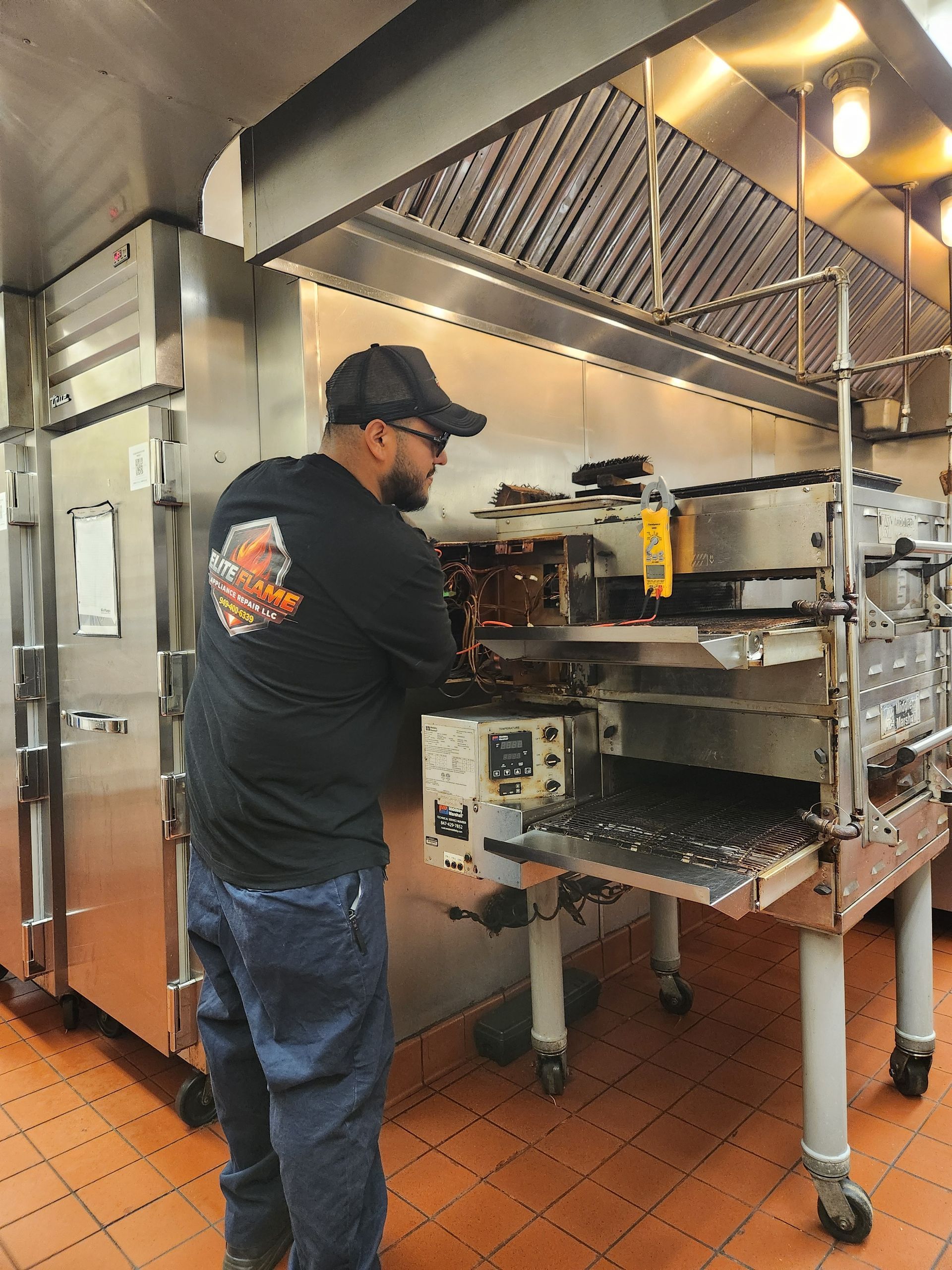
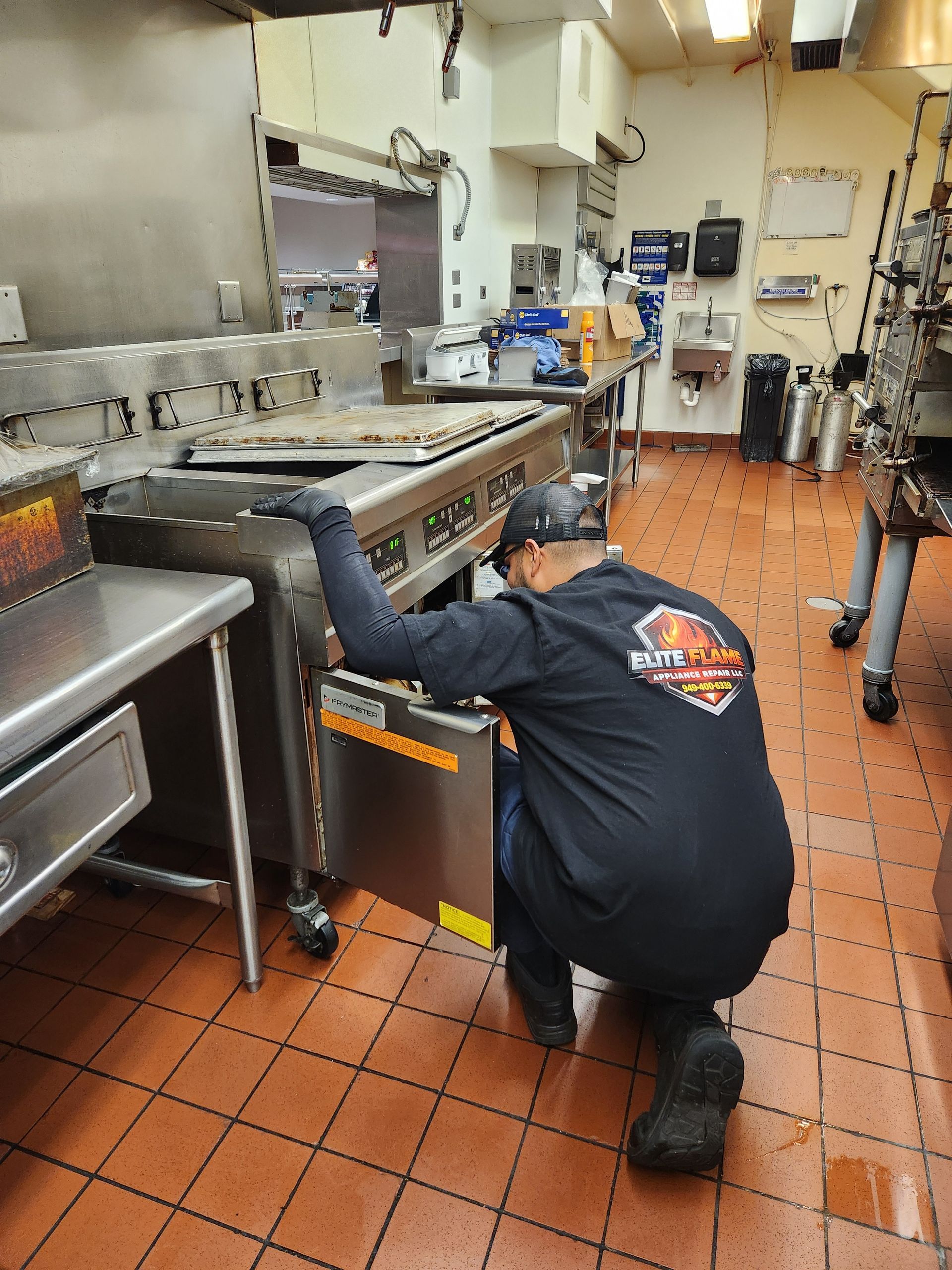
HEAT IS THE EASY PART. CONTROL IS THE JOB.
Any burner can make heat. The difficulty is holding a set temperature through a 4-hour service while the hood pulls hard and the gas line feeds six other appliances. We chase the control side first: thermostats, probes, gas valves, safety limits, and manifold pressure, because that is where a hot line actually fails, long before the burner itself gives out.
Repairs are staged so the line comes back in the order you need it. If two units are down and one plates 80 percent of your menu, that one gets solved first.
- Gas pressure checked against the rating plate
- Thermostats calibrated with a test probe
- Safety limits and interlocks verified
- Repairs sequenced around your service hours
COMMERCIAL HOT-SIDE KITCHEN EQUIPMENT REPAIR
ONE COLD SECTION CAN CLOSE A WHOLE MENU.
A griddle running 60 degrees cool on one end does not stop service, it just slows every ticket that crosses it. A holding cabinet drifting below 135 degrees turns a lunch prep into waste. Hot-side faults rarely announce themselves with smoke and silence. They show up as longer tickets, inconsistent plates, and a walk-in filling with food that had to be pulled. By then the problem has been costing you for weeks.
LA PUENTE KITCHENS COOK IN TIGHT ROOMS.
Much of the commercial space along Main Street and Valley Boulevard was built in the first half of the last century, and the kitchens behind those storefronts are small, hot, and packed. Equipment sits shoulder to shoulder with no service clearance. We plan the pull before we start, so a fryer or range comes out without taking the line apart around it.
10+ YEARS ON HOT LINES THAT CANNOT GO DOWN.
Hot-side work is learned in the middle of service, not in a classroom. 10+ years of hands-on hot-side work has taught us what a lazy flame, a slow recovery, or a burner that lights twice out of three tries is really telling us. Pattern recognition shortens the diagnosis, and a shorter diagnosis means your line is back before the next rush. What is yours doing right now?
WHY CHOOSE US FOR COMMERCIAL HOT-SIDE KITCHEN EQUIPMENT REPAIR.
Fewer Vendors On Your Callback List
Cooking equipment, refrigeration, and the HVAC over both come from the same contractor. One relationship, one history of your building, and no arguments about whose problem the failure actually is.
Repairs That Hold Under Load
Testing at idle proves nothing. Units are brought to working temperature and held there before we sign off, which is why a fault rarely comes back the following week.
An Inspection-Ready Cook Line
Equipment failures get scored directly on a Los Angeles County inspection report. Repairs are finished to a standard that holds up when an inspector opens the door, not just until closing.
Straight Answers On Repair Versus Replace
When a unit has reached the end of a useful life, we say so and explain why. Nobody benefits from a third repair on a range that should have been replaced already.
Scheduling Around Your Service Windows
Most hot-side work happens before open or after close, because pulling a range at noon is not a repair, it is a shutdown. 7-day availability makes that easier to arrange.
A Written Record Of What We Found
Every visit ends with notes on what failed, what was corrected, and what is trending toward failure. That record settles warranty questions and makes budgeting for replacement far less guesswork.
WHAT WE FIX
OUR HOT-SIDE REPAIR WORK
The cook line is a collection of very different machines that happen to share a gas manifold and a hood. Below is what we service across it, and how each one usually goes wrong.
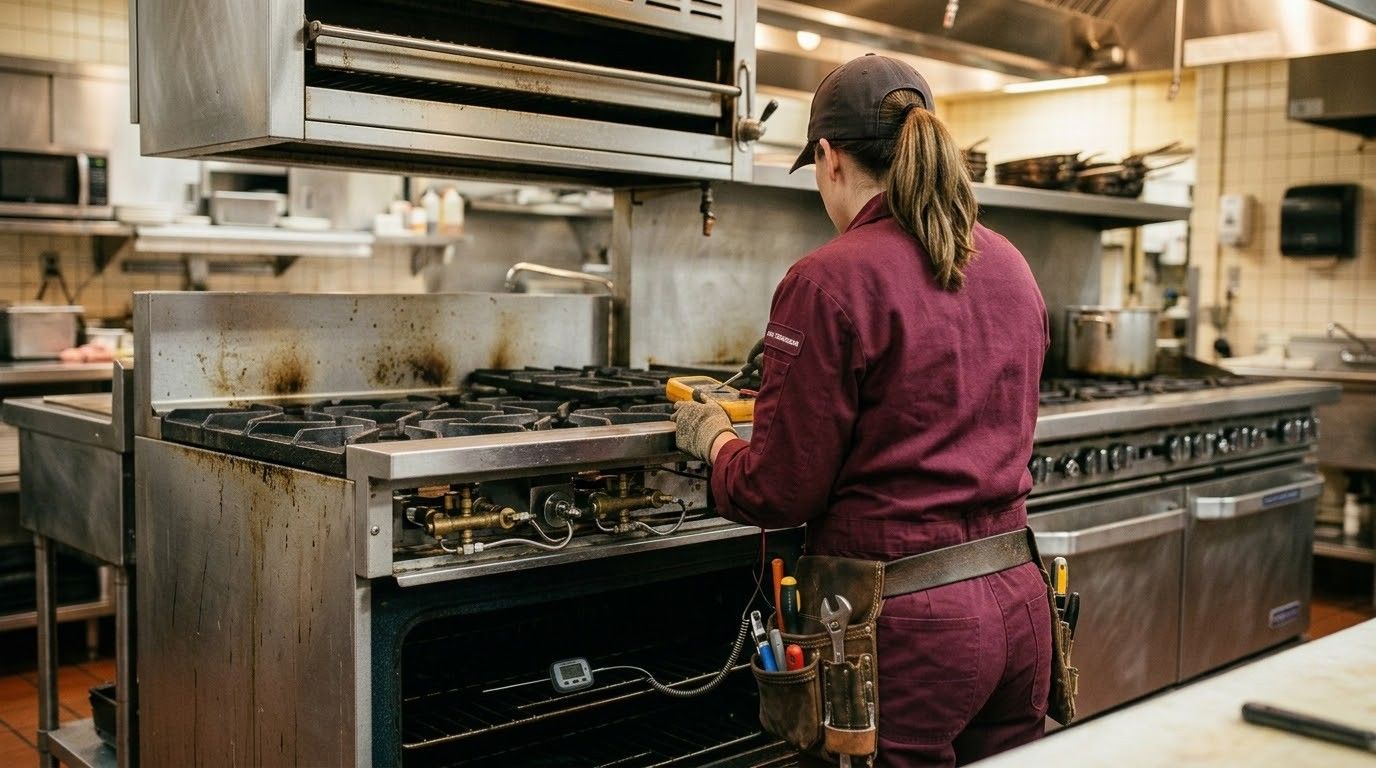
RANGES AND OVENS
Ranges, Ovens, and Salamanders
Burner ports, pilot assemblies, thermocouples, and oven thermostats that drift low first and high later. Calibration is verified against a test probe placed in the cavity, not against the marking printed on the dial.
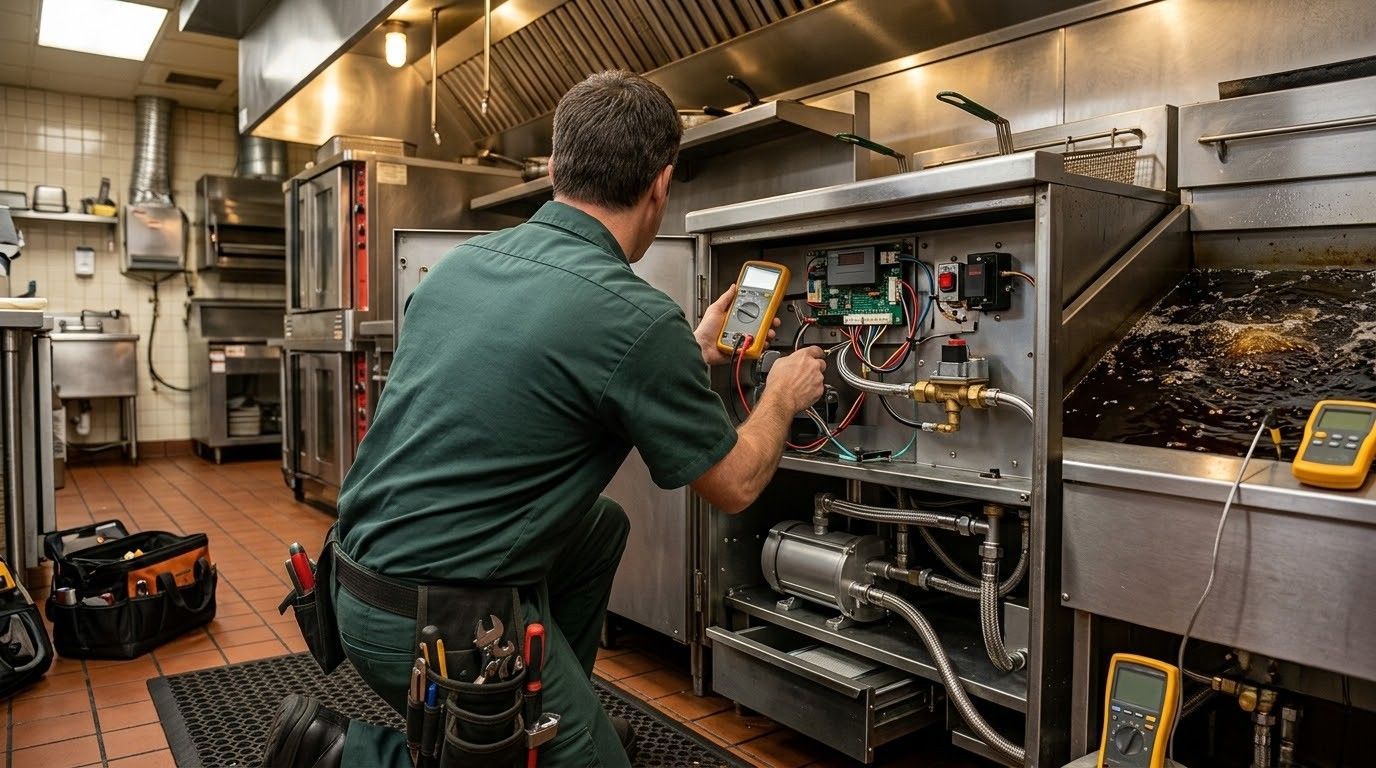
FRY STATION
Fryers and Fryer Filtration
High-limit thermostats open somewhere above 425 degrees, so a unit tripping at a 350 setpoint has a control fault rather than an oil problem. Drain safety switches and filtration pumps are checked in the same visit.
FLAT TOPS
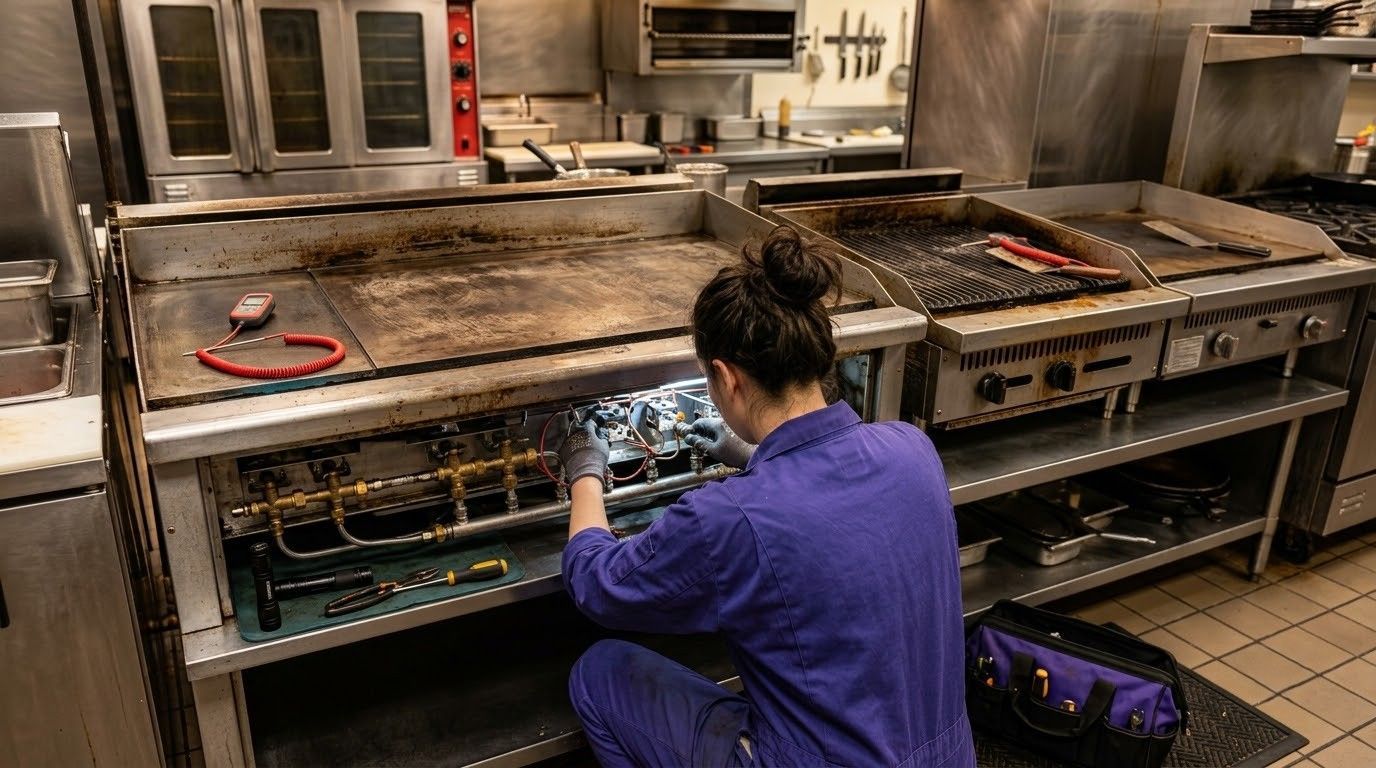
Griddles, Charbroilers, and Grills
Thermostatic griddles regulate each 12-inch section independently, which means a cold band points at one zone rather than the whole appliance. Clogged ports, warped plates, and failed snap-action thermostats are the usual causes.
STEAM AND HOLD
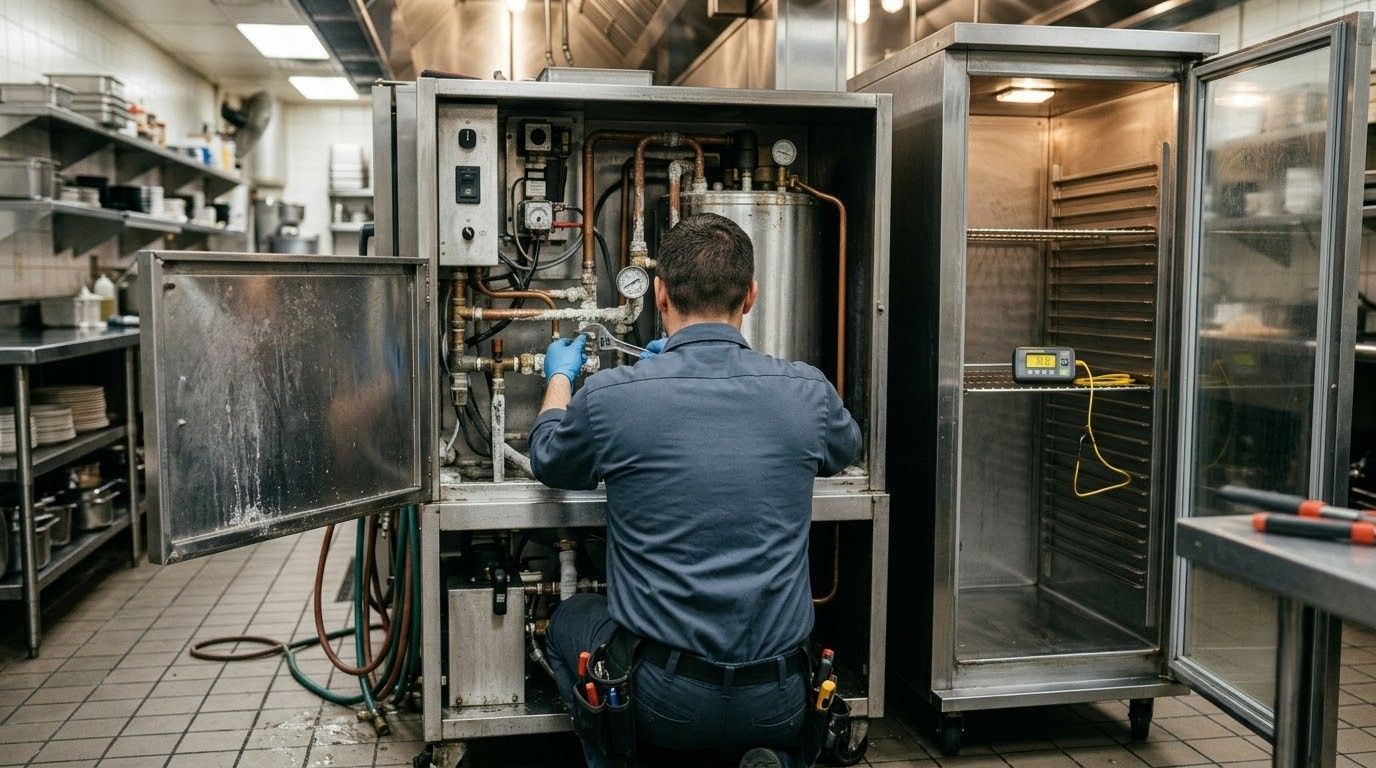
Steamers, Kettles, and Holding Cabinets
Scale from very hard local water is the first suspect on a steamer that will not build pressure. Holding equipment gets tested against the 135-degree threshold an inspector will measure, across every shelf position.
GAS SIDE
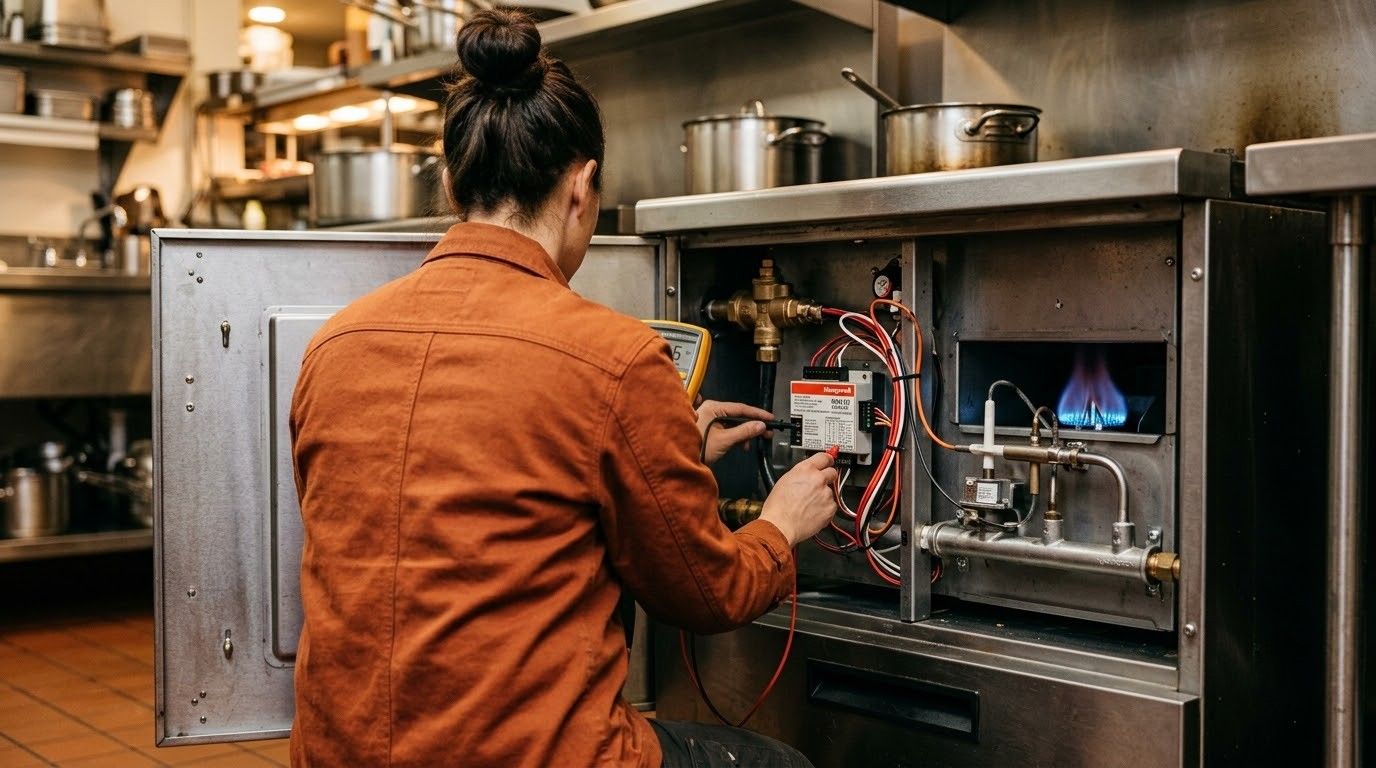
Gas Valves, Igniters, and Safety Controls
Ignition modules, spark electrodes, flame sensors, and high-limit switches follow a fixed sequence. Reading that sequence in order identifies the failed component instead of replacing three parts and hoping one of them mattered.
PLANNED WORK
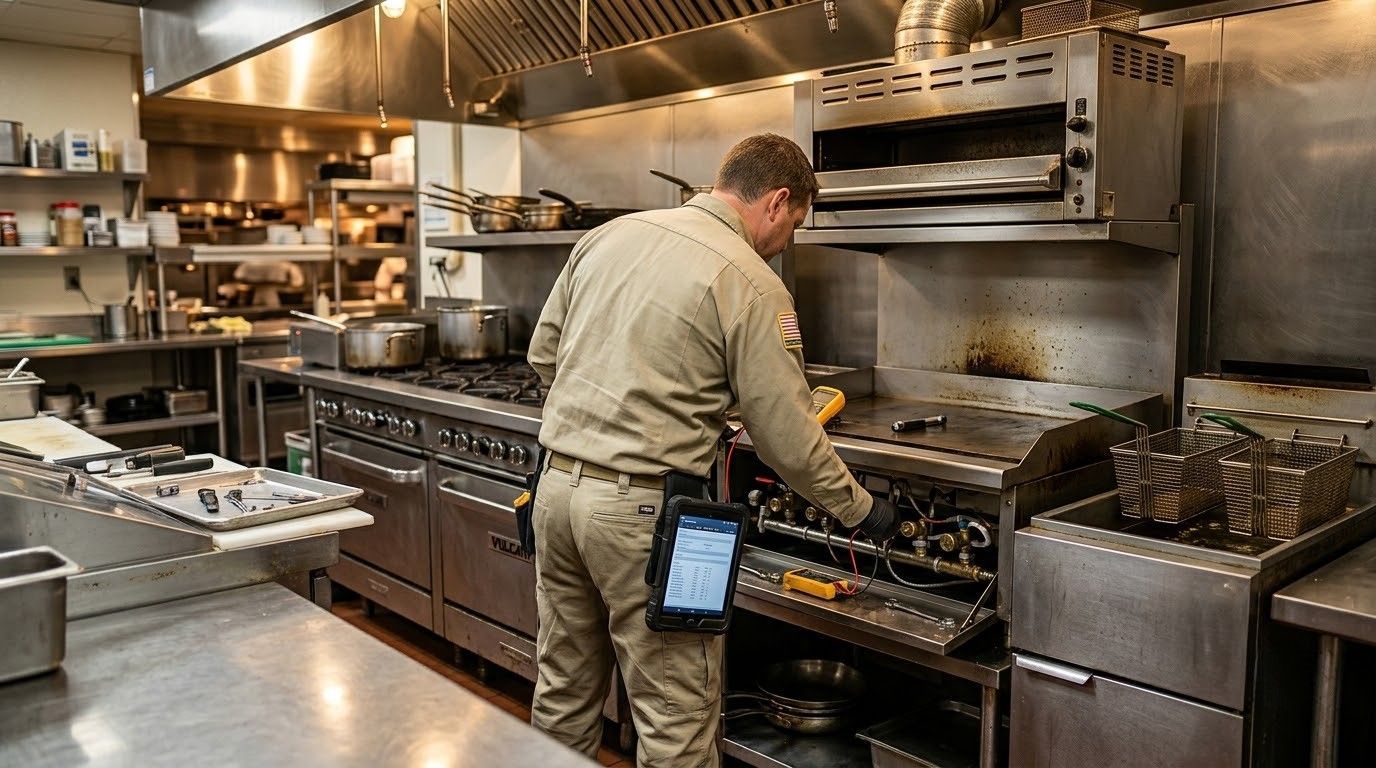
Scheduled Hot-Side Inspections
A quarterly walk of the line catches drifting thermostats, weeping gas connections, and doors no longer sealing before any of them turn into a closed section. Findings are written up and priced separately.
faq
frequently asked
questions.
Questions we hear from kitchen managers and owners across the San Gabriel Valley, mostly about maintenance intervals, what causes the failure they are looking at, and how long a fix takes.
What are the most common issues with commercial kitchen appliances?
Ignition faults, drifting thermostats, worn door gaskets, and clogged burner ports account for most calls. Nearly all of them trace back to heat cycling and grease, which is why maintenance intervals matter more than equipment brand.
How often should restaurant equipment be serviced?
Quarterly is the practical interval for a full-service kitchen, and monthly for high-volume operations running past 12 hours daily. Refrigeration condensers usually need attention every 30 days regardless of how the rest of the cooking equipment is scheduled.
Why does the pilot light on my range keep going out?
A weak or failing thermocouple is the usual answer. It has to generate enough millivolts to hold the gas valve open, and once it degrades the valve closes even though the flame looked normal a second earlier.
Will the pilot stay lit if the thermocouple is bad?
Usually not for long. It may hold while you keep the knob depressed and drop out the moment you release it, which is the clearest field symptom that the thermocouple, not the burner, has failed on you.
My steam table is not getting hot. What could be the problem?
Check the water level first, then the element or burner, then the thermostat. Many steam tables fail because scale has coated the element, which is a common outcome with San Gabriel Valley water at 13 grains per gallon.
How do I know if an oven door gasket has failed?
Heat escaping at the seam, a scorched cabinet front, or bakes that brown unevenly toward the door all point at the gasket. Elite Flame Appliance Repair LLC replaces them across La Puente, CA, usually in a single visit.
Can hot-side equipment be repaired without shutting the kitchen down?
Often, yes. Single-unit work can usually be isolated while the rest of the line keeps running. Elite Flame Appliance Repair LLC schedules the larger jobs before open or after close for kitchens throughout La Puente, CA.
Why is my equipment failing more often than it used to?
Grease loading, heat cycling, and deferred maintenance compound each other. A hood that is overdue for cleaning restricts airflow, which raises ambient temperature at the line, which shortens the life of every single control on it.
HOW WE WORK
FROM THE FIRST CALL TO A LINE BACK IN SERVICE.
STEP 01
Describe The Fault
Tell us the make, model, and what the unit is doing, not just that it is broken. Half of a hot-side diagnosis happens on the phone, and it determines which parts ride out on the truck.
STEP 02
Schedule Around Service
Visits are set for the window that costs you least, usually before open or after close. Emergency situations are handled differently, and we will say plainly which category your problem actually falls into.
STEP 03
Diagnose With Instruments
Manometer on the gas line, meter on the ignition circuit, probe in the cavity. Readings get recorded rather than remembered, so the second visit starts from data instead of from somebody's rough recollection.
STEP 04
Confirm The Repair Path
Before anything is replaced, you get the fault, the options, and the honest case for repairing versus replacing. If a unit is past saving, we will tell you that instead of selling you a part.
STEP 05
Repair And Test Under Load
The unit is brought to working temperature and held, gas connections are leak-checked, and safety controls are cycled. A repair that passes at idle and fails at 6 p.m. is not a repair.
STEP 06
Leave A Written Record
You get notes on what failed, what was corrected, readings taken, and anything trending toward a future failure. That document is what makes your next budgeting conversation straightforward rather than a piece of speculation.
REQUEST YOUR SERVICE CALL
GET THE LINE BACK BEFORE THE NEXT SERVICE.
A hot-side fault costs you every hour it sits. Send us the make, the model, and the symptom through the contact form or the booking page, and kitchens across La Puente, CA can have an answer the same day.
WHAT YOUR SERVICE CALL COVERS:
- A measured diagnosis, not a guess
- Gas pressure and ignition circuit readings
- Thermostat calibration against a test probe
- Repair and replacement options explained plainly
- Testing under working load before we leave
- Written findings on anything still outstanding